
Varispeed – Linked Pitch and Speed for Natural-Sounding Practice
Discover how Varispeed in Transpose links pitch and speed together like a tape deck, giving you the highest audio quality for slight pitch corrections.
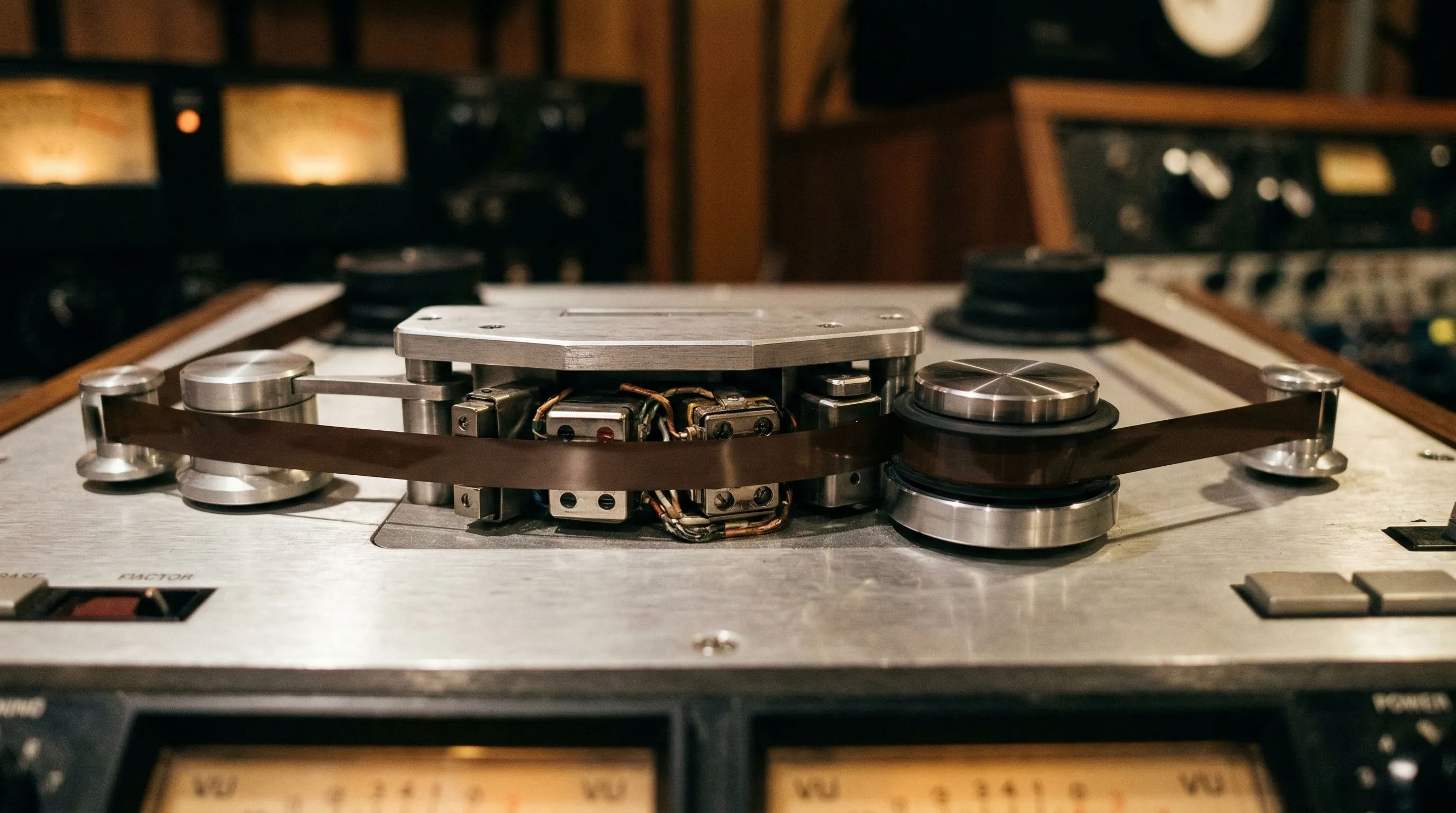
What is Varispeed?
Varispeed links pitch and speed together, just like a tape deck or vinyl turntable. When you raise the pitch the playback speeds up; when you lower it, the playback slows down. This is the same behavior you hear when you spin a record faster or slower — the relationship between pitch and tempo stays natural.
In Transpose, Varispeed is a single toggle in the Pitch / Speed panel. Flip it on and the two controls become coupled instead of independent.
Where does the name come from?
The term Varispeed — short for variable speed — originated in professional recording studios. Early reel-to-reel tape machines from manufacturers like Studer and Ampex included a Varispeed control that let engineers adjust the playback speed of the tape transport. Speeding the tape up raised both pitch and tempo; slowing it down lowered both.
Producers used this creatively for decades. The Beatles famously relied on Varispeed at Abbey Road Studios — “Strawberry Fields Forever” spliced two takes recorded at different speeds and pitches. John Lennon’s voice on “Rain” was sped up on tape to give it a brighter, compressed quality. Later, hip-hop producers sampled vinyl at different turntable speeds for the same reason: pitch and tempo shift together naturally.
In Transpose, the name carries the same meaning: one control changes pitch and speed in lockstep, with no digital time-stretching in between.
Why does linked pitch and speed matter?
Normal pitch shifting uses time-stretch processing to keep the tempo steady while the pitch changes. That works well for large shifts, but it can introduce subtle artifacts — a slight metallic texture, phasing, or loss of crispness.
Varispeed avoids time-stretching entirely. Because pitch and speed move together, no stretching algorithm is needed. The result:
- Highest possible audio quality — the original waveform is simply played back faster or slower.
- Zero stretching artifacts — no metallic shimmer, no phase smearing.
- Natural analog feel — the same warm character you get from speeding up or slowing down a tape machine.
When should you use Varispeed?
Varispeed is ideal when you only need a small pitch adjustment (roughly −2 to +2 semitones). Common scenarios:
- Fine-tuning to a recording that is slightly sharp or flat. Many live recordings or older tracks are not exactly at A = 440 Hz. A half-semitone nudge via Varispeed keeps the audio pristine.
- Matching a practice track to your instrument. If a backing track is off by a fraction of a semitone, Varispeed corrects it without degrading the sound.
- Analog-style slow-down practice. Slowing a passage down by a few percent also lowers the pitch naturally — great for ear training where you want to hear the “tape effect.”
- DJ-style pitch riding. Nudging tempo and pitch together for creative or mixing purposes.
Varispeed vs. normal pitch shifting
| Normal pitch shift | Varispeed | |
|---|---|---|
| Pitch and speed | Independent | Linked |
| Processing | Time-stretch algorithm | None (playback rate change) |
| Audio quality | Very good, possible minor artifacts | Highest — no processing artifacts |
| Useful range | Up to ±12 (or ±36 extended) semitones | Roughly ±2 semitones |
| Best for | Large key changes | Small corrections, natural feel |
How to enable Varispeed in Transpose
- Open Transpose on any supported site (YouTube, Spotify, SoundCloud, and more).
- Expand the Speed or Pitch panel.
- Toggle Varispeed on.
- Adjust the linked control — pitch and speed move together automatically.
Varispeed is a Pro feature. You can try it during the free 7-day Pro Trial, or unlock it permanently with a Pro subscription.
Tips
- Combine Varispeed with Reference Tuning if the recording uses a non-standard pitch standard. Tuning corrections then also drive linked speed/pitch behavior.
- If you need a shift larger than about two semitones, switch back to normal mode — the time-stretch engine handles bigger intervals better.
- Varispeed respects your current Extended Range setting, but the actual range stays constrained to the tighter linked limits.